To choose the right granite slab, weigh six factors together: color and pattern, thickness, durability, maintenance, budget, and application type. Treat them as one checklist. A slab that suits one project can fail another, so fit—not trend or price alone—drives the decision. This guide walks through each factor in order, giving you a clear basis to compare options with confidence. You will find grading basics, hands-on inspection tips, common mistakes to avoid, and guidance on where to buy. Commercial and residential work each demand their own balance. Read on, and you can match stone to purpose, not guesswork.
Key Takeaways
-
Match color, pattern, and finish to your space and lifestyle before you buy.
-
Choose thickness and durability based on how you will use the granite.
-
Plan your budget and maintenance routine to fit your project's needs.
-
Commercial projects need traffic-ready stone; residential projects can focus on beauty.
-
Inspect slabs in person and ask about grading and block matching to avoid mistakes.
Granite Slabs and Granite Slab Grading
What a Granite Slab Is
A granite slab is a large-format piece of natural stone cut from a single block. You use these pieces for countertops, wall cladding, flooring, and decorative elements. They differ from tiles, which come in small standardized squares, and from engineered stone, which manufacturers bind from crushed minerals and resin. A full slab preserves continuous veining and gives you more freedom with edge profiles and finishes. A single block yields several matching slabs, which matters when a project needs visual continuity. Prefabricated granite slabs arrive in standard sizes with pre-applied edges, so they support faster installation on large-scale projects. Both formats use the same natural granite; the difference lies in fabrication and lead time.

How Granite Slab Grading Works
Granite slab grading is not governed by one universal standard. Suppliers classify slabs by several criteria, and granite grading helps you compare options fairly. Color consistency ranks high: higher grades show even tone and pattern across the surface. Thickness matters too, since slabs typically run 2–3 cm and uniform thickness prevents edging and installation problems. Each slab should measure consistently. Density and porosity affect stain resistance. Surface finish affects appearance and maintenance rather than strength. Inspectors also separate tiny natural fissures, which do not weaken stone, from cracks, which are damage. Fabrication quality—precision cutting, polishing, and edge work—shapes final granite slab quality regardless of grade.
Granite slab grading rewards a close look. Top grades show virtually no visible pits or veins. Lower grades carry noticeable variation and a rougher polish. High-grade granite suits premium, flawless finishes. Premium-grade granite balances cost and appearance for residential and commercial work. Ask any granite slab manufacturer how they assign grades before you shortlist. Reliable granite grading lets you compare a high-quality granite option against a budget one on equal terms. Consistent granite grading protects you from mismatched slabs later. Sound granite grading also flags cracks early. Treat the grade as a starting filter, not a verdict.
Color, Pattern, and Finish for Granite Slabs
Reading Color and Pattern
Compare slab colors and patterns against the whole design before you commit. Rushing this step leads to regret once the stone sits in the room. Subtle variation suits a cleaner, more modern look. White Ice, nearly pure white with faint pale gray veining, pairs well with lacquered white or light wood cabinets and lets accent colors pop. Colonial White offers understated elegance for transitional spaces. Heavily patterned granite makes a bolder statement. Azul Platino, a midnight blue with silvery gray, becomes a dramatic focal point. Emerald Pearl brings vibrant green and black swirls to a feature wall.
Match the stone to the surrounding palette. White granite with gray, black, red, or blue flecks pairs strikingly with darker cabinets and can create an illusion of more open space in smaller rooms. Black or gray granite delivers drama against light wood or white cabinets. Dark brown or beige granite offers a neutral palette that works across many styles. Red and blue granite are uncommon and make an exotic focal point beside light cabinets and muted paint. Check samples under the actual lighting of the space, since the same slab can look different in morning and afternoon light.

Choosing a Finish
Finish changes how a granite slab looks, performs, and ages. Polished granite is reflective and mirror-like, makes colors pop, and suits contemporary styles. Honed granite has a subtle sheen, mutes patterns slightly, and hides fingerprints and watermarks. Leathered and flamed surfaces add texture and grip.
| Finish | Slip Resistance | Maintenance |
|---|---|---|
| Polished | Low | Easy (less frequent sealing) |
| Honed / Matt | Medium | Moderate (seal regularly) |
| Leather | High | Easy (hides marks; occasional sealing) |
Polished stone is the least porous and easiest to clean, but it turns slippery when wet. Honed and leathered finishes offer better slip resistance, so they suit flooring and wet areas. Flamed granite provides excellent traction and weather durability for high-traffic and outdoor use. All finishes benefit from sealing; polished needs it least often, honed and leather more regularly. Confirm your maintenance capacity before you choose a finish.
How to Choose the Right Granite Slab
Thickness, Strength, and Durability
Thickness and strength requirements shift with the application. The Natural Stone Institute publishes "Specifications for Architectural Granite," a guide covering cladding, flooring, paving, anchoring, and tolerances. Use it as your reference for recommended specifications. For kitchen countertops, 3 cm is the standard thickness in the US. It provides structural strength for sink cutouts and overhangs without a plywood subtop. A 2 cm slab works in kitchens with a plywood subtop for support, and it limits you to simpler edge profiles. Bathroom vanities commonly use 2 cm because cutouts are smaller and spans shorter. Overhang limits follow thickness, but not in a simple ratio:
| Slab Thickness | Prescribed Overhang Limit |
|---|---|
| 2 cm | 6 inches |
| 3 cm | 10 inches |
Strength rises with thickness squared, yet the 3 cm overhang limit is not double the 2 cm figure. Overhang limits depend on more than pure strength scaling. ASTM C615 sets referenced test values for granite acceptance, so confirm your supplier's test data against it. Durability matters over the long term. Granite's quartz and feldspar content makes it heat & scratch resistant, and its hardness limits damage from daily use. A granite countertop can last 30 years to a full century. Commercial settings see more intensive use and typically reach 15–20 years with proper upkeep. Installation quality, sealing, and use intensity drive that range.
Maintenance and Budget Fit
Frame budget as fit, not cheap versus expensive. Material accounts for 35–50% of total installed cost, and fabrication and installation take the rest. Level 1 builder-grade granite runs $40–$55 per sq ft installed. Level 3 exotic stone reaches $85–$150 or more. A typical 30–40 sq ft kitchen lands between $2,400 and $6,000. Hidden costs add up. Sink cutouts cost $100–$300 each, and premium edge profiles reach $40 per linear foot. Honed or leathered finishes add $5–$15 per sq ft. Delivery runs $150–$200, and old countertop removal adds $100–$200. Slab waste of 10–15% raises material needs on complex layouts. Match maintenance to capacity. Light-colored granite is more porous and needs sealing every 6–12 months. Dense dark stone can go 2–3 years. A water-drop test tells you more than a calendar: beads after 30 minutes mean the sealer holds. Every option has a best-fit application. A modest grade with a simple edge suits a rental unit; an exotic slab suits a statement space. Apply the same granite grading filter to both, and let the application set the budget ceiling.
Granite for Commercial vs. Residential Projects
How the Two Differ
Commercial granite selection depends on application, traffic level, design requirements, maintenance program, and procurement considerations. Hotel lobbies, shopping centers, airports, restaurants, and busy public buildings endure substantially more wear than a private home. Abrasion resistance and slip considerations therefore matter most on flooring and walking surfaces. Natural granite is not automatically maintenance-free. Varying porosity and mineral composition mean you may need a suitable sealer and a defined maintenance program, particularly in food-service environments. Procurement also carries weight. Slabs from the same quarry can differ in mineral concentration, movement, grain direction, or color intensity. On large commercial projects, discuss block selection, slab grouping, production sequence, and visual approval before mass fabrication. Compare complete landed cost rather than only the FOB stone price, and confirm supply and replacement availability for multi-phase work. A replaceable stone offers a commercial advantage over a rare, short-run material.
Residential projects can lean more on aesthetics and lifestyle fit. You weigh beauty and durability against how you actually live in the space. A busy family kitchen countertop faces spills and daily cleaning; a guest bathroom vanity sees far less. Residential-grade granite still needs sealing, but the schedule is gentler. Commercial-grade granite earns its place through traffic tolerance and repeatable supply. Both paths reward the same discipline.
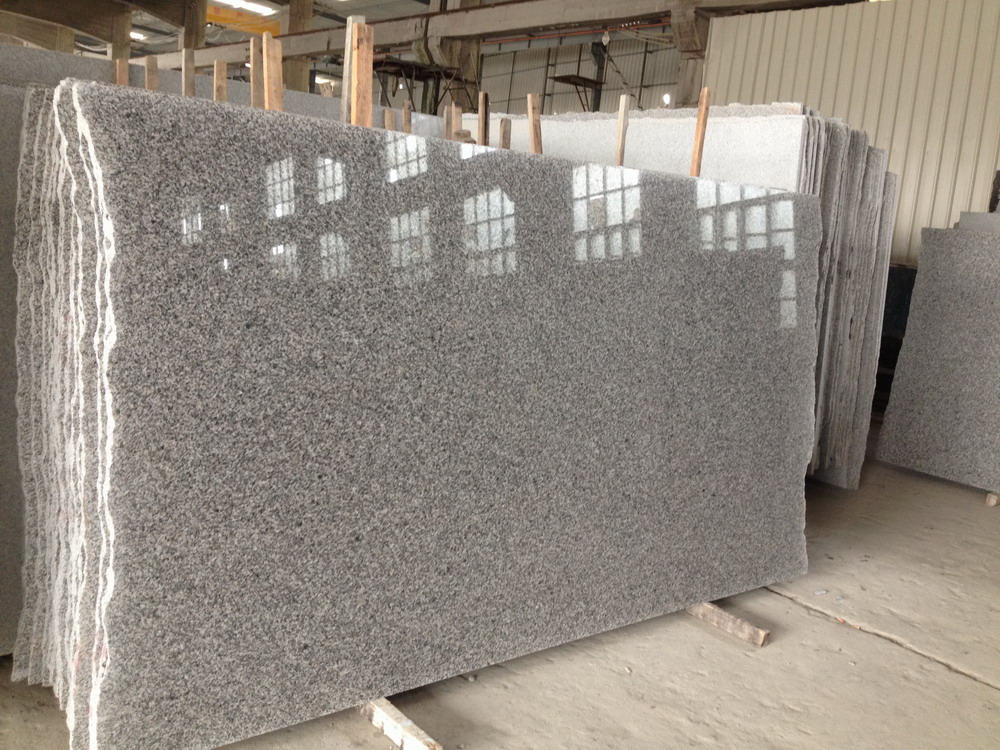
Inspection and Common Mistakes
View slabs in person whenever possible. Photos flatten stone, compress depth, shift color temperature, and hide variation across a full slab. If you cannot visit, request multiple photos under different lighting plus a description of full-surface variation. A sample chip shows only the material family, never the specific slab. Check cracks, pits, and color and pattern consistency with a few simple tests.
| Feature | How to inspect | What it means |
|---|---|---|
| Cracks vs. fissures | Run a fingernail across the line; a gap or catch = crack, smooth = fissure | Cracks are structural damage; fissures are natural and do not affect strength |
| Pits and voids | Look for small pits (1–2 mm) and larger voids (5 mm+) | Small pits are normal and can be resin-filled; large voids near edges may signal weakness |
| Resin repairs | Check for factory-applied resin patches | Standard practice; patches over 1 inch may indicate significant original damage |
| Staining | Look for dark spots, rings, or unnatural color changes | May come from yard storage and may or may not be removable |
Sight along the slab at a low angle. Sharp, mirror-like reflections of overhead lights indicate even polishing; blurry or cloudy reflections reveal uneven work. Watch for stun marks and excessive resin fill. Ask to see the slab wet and dry, since yards spray water to enhance color. View candidates in natural sunlight where possible, because fluorescent warehouse lighting shifts colors toward blue or green.
Choose slabs cut from the same block so they match. Slabs arriving without bundle tags or lot numbers make claims impossible to trace. Inconsistent thickness within one bundle signals poor quality control. Pattern variation beyond what the material normally shows suggests off-cuts from multiple blocks sold as a matched bundle. Undisclosed epoxy repairs may look fine on the slab and fail at the fill point after cutting. Skipping in-person inspection remains the costliest mistake. Choosing a finish before confirming maintenance capacity ranks close behind.
For credibility context, MRD Stone has manufactured and exported stone since 1998, with factories in Nan'an near Xiamen Port, ISO9001, NSF, BV, and SGS certifications, and supplied projects including a luxury villa in Zhangzhou, a pool project in Hawaii, and office towers in West Palm Beach.
Buying Granite Slabs and Care Tips
Where to Buy and What to Ask
Compare full slabs against prefabricated options before you commit. Each format serves a different project profile. You can review available granite slabs to compare colors, finishes, and slab options for different applications.
| Aspect | Full Granite Slabs (Custom) | Prefabricated Options |
|---|---|---|
| Cost (installed) | $50–$200 per sq ft | $10–$40 per sq ft |
| Timeline | 2–4 weeks from signed contract to install | Ships in 1–2 weeks if design allows |
| Customization | Cut to exact dimensions; customizable edges and finish | Fixed standard sizes (~96 in × 25.5 in); limited edge and color options |
Prefabricated pieces lower cost and shorten wait time. Custom slabs give you continuity of color and fewer visible seams. Ask a natural granite supplier whether the grade applies to individual slabs or the whole lot. Request photographic documentation of the specific lot before loading, not catalog images. Confirm whether edge chipping, fissures, and fill repairs are acceptable under the quoted grade. Establish a claims threshold, typically 3–5% of delivered pieces, above which the supplier absorbs replacement cost. Ask where your order falls in the production schedule and build a 2–3 week buffer into the timeline. A granite slab manufacturer operating under ISO 9001 or an equivalent third-party certification gives you a traceable quality baseline. For projects requiring countertop fabrication, you can also compare G623 gray granite slab specifications and available finishes.
Maintenance That Protects Your Investment
Daily care starts with a soft microfiber cloth and a mild soap solution. Avoid acidic, harsh, or abrasive chemicals that degrade the seal and dull the finish. Choose pH-neutral, stone-specific cleaners and confirm suitability for your finish. A water-bead test tells you when resealing is due: water that no longer beads signals a worn seal.
Sealing frequency depends on finish and stone density. Honed granite needs resealing every 1–2 years; polished granite holds its seal every 2–5 years. Apply an even coat, let it soak 15–30 minutes, wipe excess, and cure 24–72 hours. Lighter stones are usually more porous and need sealing more often. Honed surfaces mute color by roughly 20–30% and hide scratches well. Polished surfaces resist stains better but show water spots. A properly selected and sealed countertop rewards that discipline for decades. Whether you choose commercial-grade granite or a residential grade, the care routine protects the investment. For countertop and vanity applications, MRD Stone also offers natural stone products for different project requirements.
You now have a repeatable path. Define the application first, shortlist color, pattern, and finish, confirm thickness and durability, check maintenance and budget fit, then inspect slabs in person before you buy. Commercial work leans on traffic durability, maintenance programs, and procurement; residential work can favor aesthetics and lifestyle fit. Both reward the same checklist. To choose the right granite slab, view candidates under real lighting, ask how grading and block matching apply to your lot, and plan for the long term. That discipline lets you choose the right granite slab with confidence, and your granite slabs will serve the space for decades.
FAQ
How do I know which grade fits my project?
Grade labels vary by supplier, so ask how each one assigns them. Match the grade to the application: a modest grade with a simple edge suits a rental unit, while an exotic slab suits a statement space. Confirm whether the grade covers individual slabs or the whole lot.
Can I mix slabs from different blocks in one project?
Avoid it when visual continuity matters. Slabs from separate blocks can differ in mineral concentration, movement, grain direction, or color intensity. Ask your natural granite supplier for bundle tags and lot numbers, and request slabs cut from the same block for countertops, cladding, and feature walls.
What should I confirm before placing an order?
Request photos of the specific lot, not catalog images. Confirm the grading basis, block origin, certifications, and lead times. Set a claims threshold, typically 3–5% of delivered pieces, above which the supplier absorbs replacement cost. Build a 2–3 week buffer into your schedule.
Does a polished finish always make the best choice?
No. Polished granite reflects light and resists stains well, but it turns slippery when wet. Honed and leathered finishes offer better grip for flooring and wet areas. Confirm your sealing capacity first, since honed surfaces need resealing more often than polished ones.
How often should I reseal granite slabs?
Test rather than guess: water that no longer beads after 30 minutes signals a worn seal. Honed granite typically needs resealing every 1–2 years, and polished granite holds its seal every 2–5 years. A granite slab manufacturer or natural granite supplier can confirm the schedule for your specific stone.