Choosing between natural marble vs engineered quartz for your kitchen countertops comes down to one central question: what matters more to you—unique character or effortless practicality? Marble delivers breathtaking, one-of-a-kind veining that no two slabs share. This natural stone demands regular maintenance, including sealing and careful handling of acidic spills.
Quartz offers consistent patterns and superior durability. You get a non-porous surface that resists stains without the constant upkeep. The trade-off is straightforward. Marble rewards you with timeless elegance but requires commitment. Quartz provides dependable performance with minimal fuss. Your lifestyle, your aesthetic preferences, and your tolerance for maintenance will determine the winner.
Key Takeaways
-
Marble offers unique, natural beauty but requires regular sealing and careful cleaning.
-
Engineered quartz provides superior durability and stain resistance with minimal maintenance.
-
Choose marble for low-traffic areas where appearance is the top priority.
-
Choose quartz for busy kitchens and bathrooms where practicality matters most.
-
Consider total cost over time: marble's upkeep adds up, while quartz saves money long-term.
Natural Marble vs Engineered Quartz at a Glance
Before you compare the two materials, you need one clarification. Engineered quartz is a type of engineered stone. People often use the two terms interchangeably. Quartz countertops may cost more than other engineered stone options, so check the label when you shop.
The table below sums up the key differences between natural marble slabs and engineered quartz slabs. Use it as a quick reference, then read the detailed sections that follow.
Side-by-Side Factor Table
| Factor | Natural Marble | Engineered Quartz |
|---|---|---|
| Hardness (Mohs) | 3–4; softer, scratches and chips more easily | About 7; highly scratch and chip resistant |
| Water absorption | 0.2–1; porous, liquids can penetrate | 0.02; dense and non-porous |
| Heat resistance | Good; natural stone tolerates heat well | Moderate; resin binders can scorch, so use trivets |
| Stain risk | High; soft and porous | Very low; non-porous surface |
| Sealing | Needed about 1–2 times per year | Never required |
| Appearance | One-of-a-kind veining; no two slabs match | Consistent, uniform patterns |
| Acid sensitivity | Etches from lemon juice, vinegar, and wine | Resists most household acids |
The Short Verdict
Marble gives you unique natural beauty with high upkeep. Engineered quartz gives you hardness, low water absorption, and consistency with less maintenance.
Neither option wins on every point. Your choice depends on which column of that table matters most for your home.
Natural Marble: Timeless Beauty
Elegance and Unique Veining
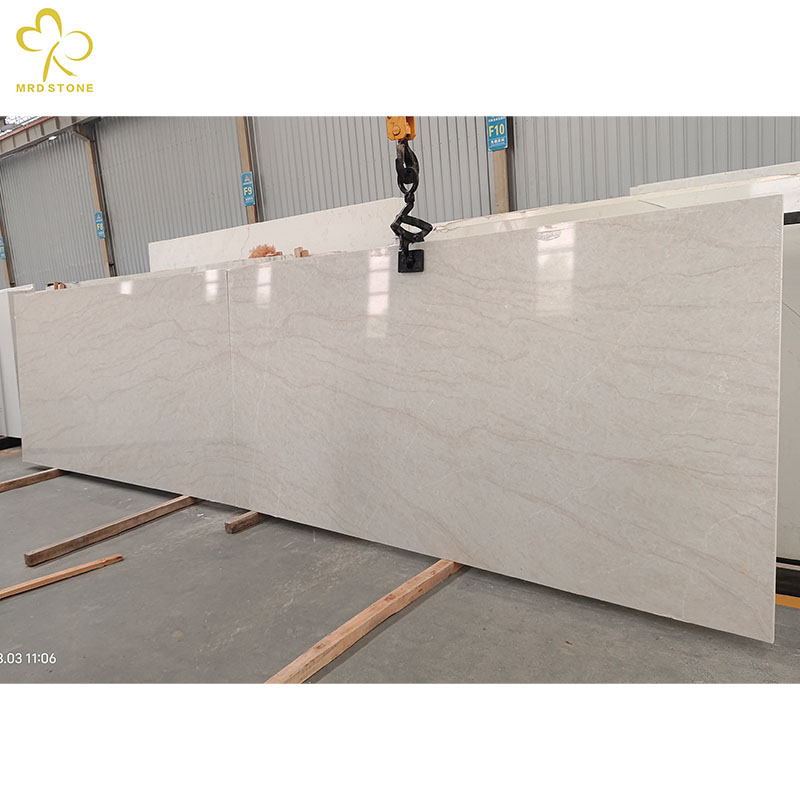
Natural marble begins as stone formed deep in the earth, and that origin gives every slab a fingerprint of its own. No two slabs look alike. Veins wander, colors shift, and the pattern you select exists nowhere else. This one-of-a-kind appearance explains why designers reach for natural marble slabs when a surface needs to carry a room.
That visual impact matters most on a marble vanity top. A bathroom vanity sits at eye level in a small space, so the stone becomes a focal point. Dramatic veining turns a simple washbasin into a statement. The same quality suits a marble countertop in a powder room or a formal bar area, where guests notice the surface up close.
Porosity and Sealing Needs
Marble consists mainly of calcium carbonate, and this mineral reacts with acids. Everyday kitchen acids such as lemon juice, vinegar, tomato sauce, wine, coffee, and fruit juices dissolve tiny amounts of the surface. The result is etching: dull, cloudy, slightly rough marks. Etching is physical damage to the stone, not a stain from a foreign substance. Cleaning cannot remove it, and repair requires mechanical re-polishing. This is the real risk of etching you accept with marble countertops.
Sealing addresses porosity, not chemistry. A penetrating sealer soaks into the pore network and slows liquid absorption, buying you time before a spill migrates and stains. Sealing frequency depends on the stone and the room:
| Condition / Location | Recommended Sealing Frequency |
|---|---|
| General marble (water-bead test check) | Every 6–12 months, re-seal if water absorbs |
| Kitchen marble (high acid/moisture exposure) | Every 6 months |
| Bathroom marble (moisture, hard water, soap scum) | Annually, or per water-bead test |
| Outdoor marble (acid rain, thermal cycling) | Every 6 months with exterior-rated penetrating sealer |
Sealing does not make marble acid-proof. Penetrating sealers fill pores to block liquid absorption but do not coat the surface, so acid still contacts the stone and etches it regardless of sealing status.
Test the surface every few months. Place a few drops of water on the stone. If the water beads, the sealer still works. If the stone absorbs and darkens within about five minutes, reseal.
Engineered Quartz: Consistent Performance
Engineered quartz outperforms marble and most other natural stones on two measurable fronts: hardness and water absorption. The numbers tell the story.
| Property | Engineered Quartz | Natural Marble |
|---|---|---|
| Mohs hardness | 7 | 3–4 |
| Water absorption | Non-porous; water beads up and stays on the surface | Porous; water absorbs into the stone and darkens the area |
That hardness gap is significant. A steel knife or a ceramic plate will not scratch engineered quartz slabs in normal use. The same tools leave marks on marble.
Non-Porous and Stain Resistant
Engineered quartz is ground natural quartz bound with polymer resins and pigments. That dense composition leaves almost no pore space, so liquids sit on top instead of soaking in. You get strong stain resistance without any sealing routine.
Quartz is an engineered stone, ground natural quartz bound with polymer resins and pigments. That composition decides what repair is realistic. The resin binder is what your repair material bonds to.
Do not read "maintenance-free" as "damage-proof," though. Quartz is hard but brittle, so edges and corners chip from dropped pots or dragged appliances. Steel wool, diamond rings, and abrasive pads can scratch the surface. Hot pans set directly on a quartz countertop can discolor or crack the resin binder. Persistent staining after a short oil or coffee test usually points to resin-rich areas or poor polishing.
Design Versatility and Uniform Patterns
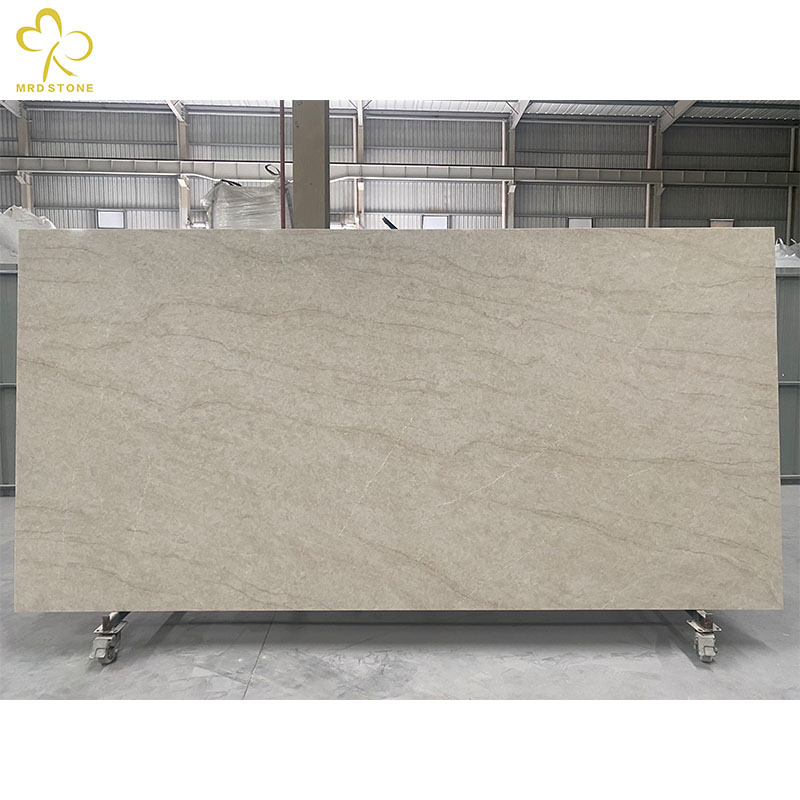
Manufacturing gives engineered quartz a level of control that nature cannot match. Colors and patterns stay uniform across slabs, which makes coordination with cabinetry, flooring, and tile far easier. You can specify solid colors, subtle patterns, or dramatic marble-look veining.
The trade-off is individuality. Because engineered quartz is manufactured, it lacks the one-of-a-kind variation found in natural stone such as marble. Every slab of marble differs; every slab of a given quartz color looks essentially the same. A sample shows the color family and pattern direction, yet large-scale veined patterns still shift across a fabricated top. Treat the sample as a guide, not a guaranteed miniature.
Appearance: Quartz or Marble Better for Looks?
This question has no universal answer. Looks come down to your priorities: do you want a surface nobody else owns, or a surface that matches a plan exactly? Both materials can look stunning. They simply deliver beauty in different ways.
When Unique Veining Matters
Natural marble slabs carry veining that formed over geological time. No two slabs match, and that irreproducibility has become a premium in high-end design. After two decades of engineered quartz dominance, natural stone is reclaiming market share. Homeowners report fatigue with manufactured sameness. Dramatic marbles such as Calacatta Viola, with its soft white ground and bold violet and gray veining, now anchor statement kitchens and baths.
Choose this route when the countertop is the focal point. A waterfall edge, a full-height backsplash, or a vanity top viewed up close all reward dramatic movement. You accept variation between slabs as part of the appeal, not a defect.
When Consistency Wins
Engineered quartz slabs offer predictable patterns across every slab. Digital printing and layered pigmentation let manufacturers scan real marble and granite at high resolution, then reproduce fine veining and depth. Popular looks include Calacatta marble lookalikes, dramatic black and charcoal surfaces, and warm gold and beige quartzite-inspired designs.
| Trend | What It Delivers | Watch For |
|---|---|---|
| Natural stone veining | Singular, geologically produced movement | Slab-to-slab variation; sealing needs |
| Engineered veining | Realistic patterns, slab consistency | Pattern repetition on long runs |
Consistency suits uniform designs. Book-matched runs, galley kitchens, and multi-unit projects benefit from surfaces that repeat cleanly. One known limitation remains: pattern repetition on long runs can look artificial. Check a layout drawing before you commit to quartz countertops for a large island.
Durability and Water Resistance
The key differences between these two materials become most obvious when you test how they handle daily wear. Hardness and water absorption tell the story. The Mohs scale measures scratch resistance. Natural marble scores a 3, which means a copper penny can scratch it. Engineered quartz scores a 7, harder than a steel knife. That gap explains why marble shows scratches from normal use while quartz countertops resist them.
| Property | Natural Marble | Engineered Quartz |
|---|---|---|
| Mohs Hardness | 3 (softer than a copper penny) | 7 (harder than a steel knife) |
| Porosity | Highly porous | Non-porous (resin-filled) |
| Water Absorption | High (0.2–1%) | Near zero (0.02%) |
| Scratch Resistance | Low | High |
| Stain Resistance | Low | High |
| Acid Etching | Highly vulnerable | Resistant |
| Sealing Required | Every ~6 months | Never |
| Expected Lifespan | ~20 years | 30+ years |
Scratch, Chip, and Stain Behavior
Marble's softness creates real problems in a busy kitchen. You drop a ceramic plate, and the edge leaves a bruise. You drag a heavy skillet across the surface, and you see a scratch. The stone also absorbs liquids because of its porous structure. Red wine, coffee, and oil seep into the surface and leave permanent marks. Acidic spills like lemon juice or vinegar attack the calcium carbonate directly, causing etching that no cleaner can remove.
Engineered quartz behaves differently. The resin-filled surface blocks liquid penetration completely. You spill tomato sauce, wipe it up, and the surface stays clean. The hardness means knives and cookware do not scratch it in normal use. Chipping remains possible at edges and corners because quartz is brittle, but the material handles everyday abuse far better than marble. Stain resistance ranks best among countertop materials, and the surface never needs sealing.
How Each Handles Moisture
Moisture exposure separates these two materials dramatically. Marble absorbs water at a rate of 0.2 to 1 percent. That porosity means standing water darkens the stone, soap scum bonds to the surface, and hard water leaves mineral deposits. You must seal natural marble slabs every six months to slow this absorption, yet sealing never makes the stone fully waterproof.
Engineered quartz slabs handle daily moisture without warping, discoloring, or losing their finish. The non-porous surface resists bacterial growth because nothing penetrates to feed microorganisms. You can leave wet glasses on the surface overnight without worry. This durability advantage makes engineered quartz the practical choice for kitchen countertops, bathrooms, and any high-traffic area where spills happen regularly.
No surface is damage-proof, though. Quartz resists most damage but can chip from heavy impacts. Marble offers beauty but demands constant vigilance. Your tolerance for maintenance determines which material fits your lifestyle.
Heat Resistance and Safety
Marble's Heat Tolerance vs. Quartz's Limits
Heat separates these two surfaces more than most buyers expect. Natural marble slabs tolerate steady heat well. Engineered quartz slabs withstand moderate heat but are not heatproof. Push quartz too far and the resin binder burns, pigments shift, and the slab can crack. Even a brief exposure above that limit can leave a permanent scorch mark and void the warranty.
Marble fails in a different way. A sudden temperature change can trigger hairline cracks and spalling, even though the stone handles moderate heat well. Treat both surfaces with the same habit: set hot cookware on a trivet or hot pad, never directly on the counter. Pull a pan from the oven and place it on the stove, not on quartz countertops. This single routine protects the finish and keeps your warranty intact.
Food Safety and Everyday Use
Food-contact safety depends less on the stone and more on certification. Many engineered quartz lines from major brands carry NSF/ANSI 51 certification for specific product lines. Check the NSF database for the exact color or formulation you plan to buy. Natural stone, including marble, generally does not hold certification as a category. Every quarry and block differs, and sealer choice affects the result, so no single formulation exists to test.
No federal law or building code requires NSF certification for countertops in homes. Certification still offers useful confidence for busy kitchens where raw meat, dough, and produce touch the surface daily. A non-porous engineered surface resists liquid penetration, which supports easier cleaning. Sealed marble works fine for food prep when you clean promptly and reseal on schedule. Keep acidic foods like tomato sauce and citrus off marble, since they etch the surface regardless of sealing.
Installation Considerations
Weight, Fabrication, and Seams
Weight shapes the installation plan before anyone cuts a slab. At 3 cm thickness, natural marble slabs weigh about 16 lbs per square foot and engineered quartz slabs about 15.5 lbs per square foot. A 2 cm slab weighs roughly two-thirds of that figure. Standard cabinets usually carry the load, yet unsupported overhangs need corbel support once they pass roughly 8–10 inches in 3 cm stone, per Natural Stone Institute guidance. Pieces over about 150 lbs call for three people or mechanical lifters.
Fabrication difficulty differs by material. Engineered quartz demands a manufacturer-specified, color-matched two-part epoxy, and the wrong adhesive can void the warranty. Marble accepts a two-part polyester or epoxy tinted to the stone's dominant mid-tone. Seam visibility also splits the two. Solid-color quartz shows seams most, because a uniform surface offers no natural camouflage. Marble veining hides joints better, yet large veins can misalign, so your fabricator must match veins across slabs.
Professional vs. DIY Expectations
Plan on professional fabrication and installation for both materials. A kitchen countertop is heavy, brittle at the edges, and unforgiving of a bad cut. Quartz edges chip from a dropped tool, and marble scratches from a careless drag. Mitered seams for waterfall edges require precise 45-degree cuts on both pieces, a job that rewards experience.
You can still prepare the site yourself. Clear the access path, confirm door widths, and check that stairs can pass a slab section. Sections are typically cut to stay under 200–250 lbs, which keeps handling manageable. Ask your fabricator for a seam layout drawing before fabrication begins. That single step prevents most surprises on install day.
Maintenance: Marble vs. Engineered Quartz
Routine Cleaning for Each Surface
Daily care separates these two surfaces more than any other factor. Natural marble slabs demand prompt attention. Wipe spills immediately, especially acidic liquids. Use pH-neutral cleaners made for stone, soft cloths, and cutting boards. Skip vinegar, citrus juice, abrasive pads, and acidic bathroom or kitchen cleaners. Those products attack the calcium carbonate in the stone and cause acid etching, a chemical surface change rather than a stain.
Engineered quartz slabs tolerate more, yet they are not invincible. Quartz is mostly natural stone bound with resin, so the safest cleaners are those formulated for granite, marble, and natural stone.
Many common household cleaners can discolor the resins in quartz and leave permanent marks, and not all natural-stone products suit quartz — sealers and marble etch removers, for example.
For routine work, use dish soap and a non-abrasive sponge. Dilute isopropyl alcohol handles sticky residue. A paste of about 3 parts baking soda to 1 part water lifts dried-on residue. Avoid bleach, ammonia, and abrasive tools.
Sealing Schedules and Repair Options
Sealing belongs to marble alone. A kitchen surface needs resealing every 6–12 months, a bathroom every 1–2 years, and outdoor stone every 6 months with an exterior-rated sealer. Run the water bead test: place about 2 tbsp of water on the surface, wait 5 minutes, and reseal if the stone absorbs it. Quartz never needs sealing.
Repair options differ too. Light etching on marble often responds to a tin oxide polishing powder. Deep etching calls for professional mechanical re-polishing with diamond pads. Organic stains lift with 3–6% hydrogen peroxide, and oil stains yield to a diatomaceous earth poultice. This cleaning and maintenance gap explains why a marble vanity top suits a careful owner, while quartz countertops suit busy households. Weigh the risk of etching against the look you want before you commit.
Cost: Upfront Price vs. Lifetime Value
Material and Installation Pricing Factors
Price tags vary widely for both materials. Engineered quartz slabs may cost more than other engineered stone options, so compare products by name rather than by category. Natural marble slabs vary by slab and origin, and a rare block commands a premium over a common one.
Professional quartz installation runs $10–$30 per square foot, and specialized labor runs $35–$85 per hour. Many installers include removal of old counters, so confirm that detail with your contractor. A countertop quote should separate material, fabrication, and labor. That breakdown shows where the money goes and lets you compare bids fairly.
| Cost Metric | Natural Marble | Engineered Quartz |
|---|---|---|
| Installed cost per sq ft | $100–$300+ | $80–$150 |
| Total install (50–60 sq ft kitchen) | $6,000–$18,000+ | $4,800–$9,000 |
| Ongoing maintenance (20 yrs) | $6,000–$10,000+ | $0 |
| Total cost of ownership | $12,000–$28,000+ | $4,800–$9,000 |
Factoring In Upkeep Over Time
The sticker price tells only half the story. Marble countertops add sealing supplies, professional re-polishing, and stain treatment across 20 years. That upkeep adds $6,000–$10,000+ to the bill. Quartz countertops carry no sealing cost, so the same period adds $0.
Total cost of ownership makes the gap clear. A 50–60 square foot kitchen in marble lands at $12,000–$28,000+. The same kitchen in the engineered option lands at $4,800–$9,000. You pay for beauty once, and you pay again to keep it.
Weigh the numbers against your timeline. A busy household saves money with quartz, because the surface asks nothing beyond routine cleaning. A careful owner who loves natural stone accepts the upkeep as part of the design budget.
Sourcing matters here. MRD STONE is a manufacturer and exporter of natural stone and artificial stone, certified to ISO9001, NSF, BV, and SGS, and shipping over 1,000 containers annually. Buying from a source that handles both material families lets you compare real quotes for your kitchen countertops side by side. Explore MRD STONE's natural and engineered stone products to compare available materials.
Quartz vs Marble Vanity Top: Which Fits Your Project?
You now have the facts. The final step is matching them to your room, your habits, and your budget. Design professionals frame this as a priorities question, not a quality contest. Both materials perform well when you choose them for the right setting.
Choose Marble If...
Pick natural marble when appearance outranks convenience and you accept stone-specific care. Each slab carries veining formed over millions of years, and no engineered surface replicates that depth. Homeowners often describe the look as timeless and high-end. A honed finish softens the sheen and makes any dullness from acidic contact far less noticeable than on a polished face. Many buyers prefer that matte look anyway.
Marble also develops a patina with use. Light etching, small scratches, and dull spots accumulate over time. Some homeowners treat this as a lived-in character seen in European kitchens and historic homes. Marble tolerates heat better than resin-based quartz, which suits bathrooms where hot styling tools land on the surface. Sealing slows liquid absorption and buys you time to wipe spills. Remember one limit: etching is a chemical reaction, not a stain, so sealer never makes marble immune to acids. Reserve natural marble slabs for powder rooms, luxury master baths, or statement islands where the surface is the focal point. Request slab photos and confirm vein direction before fabrication, since layout matters more than nominal color on large or double vanities.
Choose Quartz If...
Choose engineered quartz when low maintenance, pattern consistency, and no routine sealing drive your decision. The surface is non-porous, so it resists absorbing water around faucets, backsplashes, and seams in humid baths. Routine care needs only a soft cloth, mild soap, and water. No annual sealing, no specialty stone products, no long-term upkeep cost. Staining from makeup, hair dye, and common bathroom products stays on the surface where you can wipe it away.
Consistent patterning makes matching across large or double vanities easier. Aesthetic range covers crisp whites, soft grays, and convincing marble looks for modern, classic, or minimalist styles. An engineered quartz vanity top suits busy shared baths and rentals where predictable care matters. The same logic extends to kitchen countertops, laundry rooms, and mudrooms. Quartz countertops handle daily spills and heavy traffic without sealing schedules. One caution applies everywhere: harsh chemicals can damage the resin finish, and hot pans still need a trivet. See MRD STONE's engineered quartz stone slabs for examples of available patterns.
Weigh both columns honestly. If you want the best countertop material for a hard-working family bathroom, engineered quartz wins on practicality. If you want a one-of-a-kind bathroom vanity countertop that anchors the design, natural marble earns its upkeep. Neither choice is wrong. The right bathroom countertop simply reflects how you live.

The choice between natural marble vs engineered quartz comes down to one trade-off. Marble offers unmatched natural character, and you accept sealing and careful cleanup. Engineered quartz delivers durability and consistency with minimal fuss.
The better option maps to your priorities and your room. Kitchens reward quartz for heavy daily use. Bathroom vanities often justify marble, where visual impact matters most.
No single surface earns the title of best countertop material for every home. Request samples of both, consult a fabricator about your layout, or share your project plans in the comments. Natural marble vs engineered quartz becomes an easy call once you weigh your own habits.
FAQ
Can You Repair a Damaged Marble or Quartz Surface?
Yes, but the methods differ. Light etching on natural marble slabs often responds to a tin oxide polishing powder. Deep scratches or chips require a stone professional with diamond pads. Engineered quartz slabs resist most damage, yet a heavy impact can chip an edge. A fabricator can fill that chip with color-matched epoxy.
Does Marble Need Sealing Before First Use?
Yes. Your fabricator should apply the first sealer during installation. After that, you maintain the schedule: every 6–12 months for kitchen countertops, annually for bathroom surfaces. Run the water bead test every few months. If water absorbs within five minutes, reseal.
Which Surface Is Safer for a Family Kitchen?
Engineered quartz wins on practicality. Its non-porous surface resists bacterial growth because nothing penetrates to feed microorganisms. You wipe spills without worrying about stains or etching. Marble requires prompt cleanup of acidic foods and regular sealing. For busy households with kids, quartz countertops demand far less vigilance.
What Is the Best Daily Cleaner for Each Material?
For marble, use a pH-neutral stone cleaner and a soft cloth. Never use vinegar, citrus, or abrasive pads. For quartz, dish soap and a non-abrasive sponge work well. Dilute isopropyl alcohol handles sticky residue. Avoid bleach and ammonia on either surface, since harsh chemicals can damage quartz resins.
How Long Do These Countertops Last?
Natural marble slabs typically last about 20 years with proper care. Engineered quartz countertops can last 30 years or more. The lifespan depends on your maintenance habits. Marble needs consistent sealing and prompt spill cleanup. Quartz asks only for routine cleaning and trivet use for hot pans.